Wind Turbine Maintenance: When Mandatory Inspections Meet Resource Scarcity
Legislators, insurers and safety authorities all require regular inspections. Miss your interval by more than three months, and coverage for affected components may lapse entirely. Skip inspections altogether, and you risk losing your operating permit. Yet industrial climbers are booked months in advance. Operators take whatever slots become available—even during peak production conditions. The financial impact compounds with every forced shutdown. The regulations are unambiguous. The resources to meet them are not.

Katja Weissbach
Head of Sales
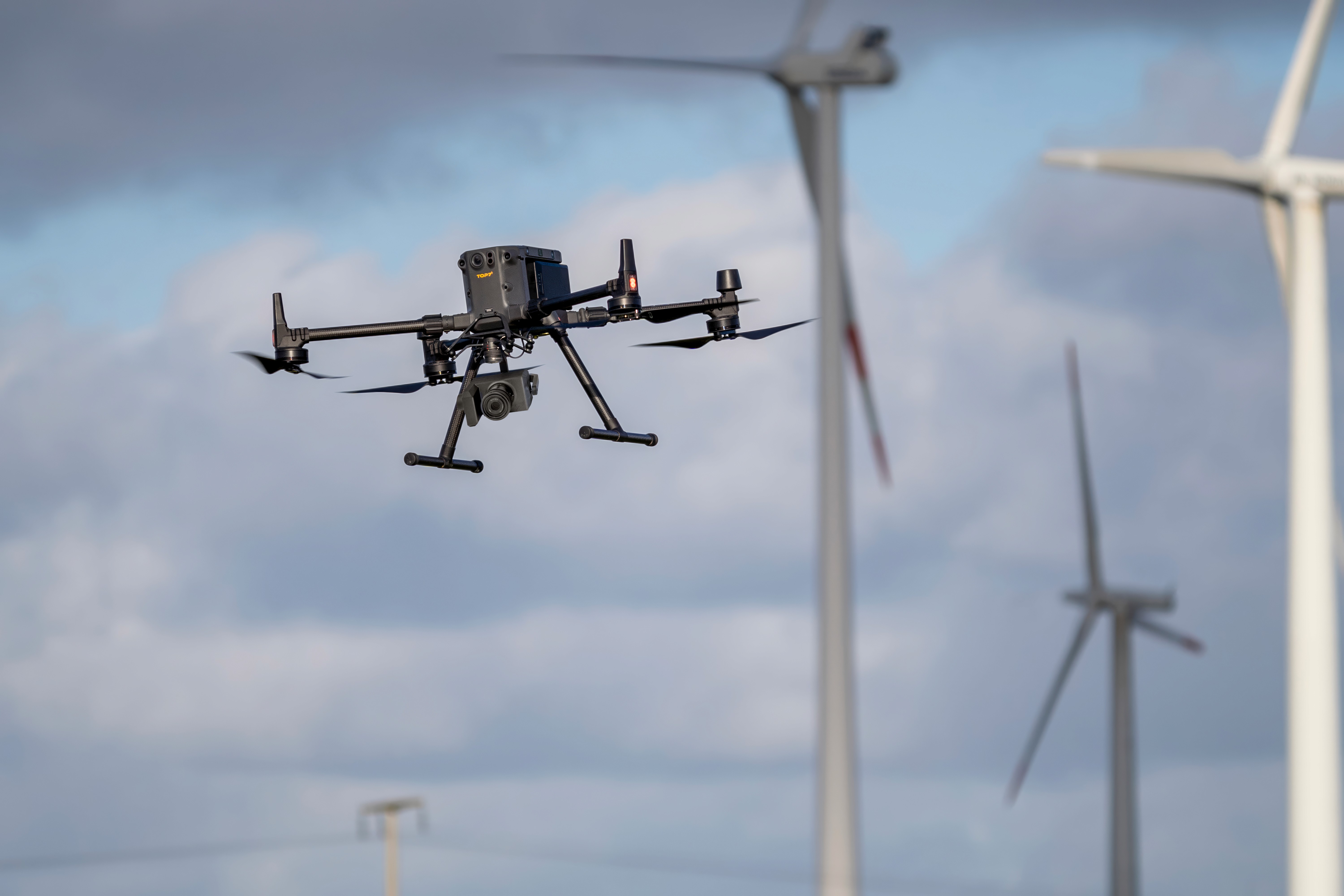
Table of contents
Share
Wind turbines endure punishment. Salt spray. Ice loads. Thermal cycling. Vibration. Every installation—onshore or offshore—faces conditions that degrade components over time.
Maintenance isn't optional. Legislators mandate it. Insurers require it. Occupational safety authorities enforce it. Fail to comply, and you risk losing your operating permit.
Here's the problem: the people who perform these inspections are in desperately short supply.
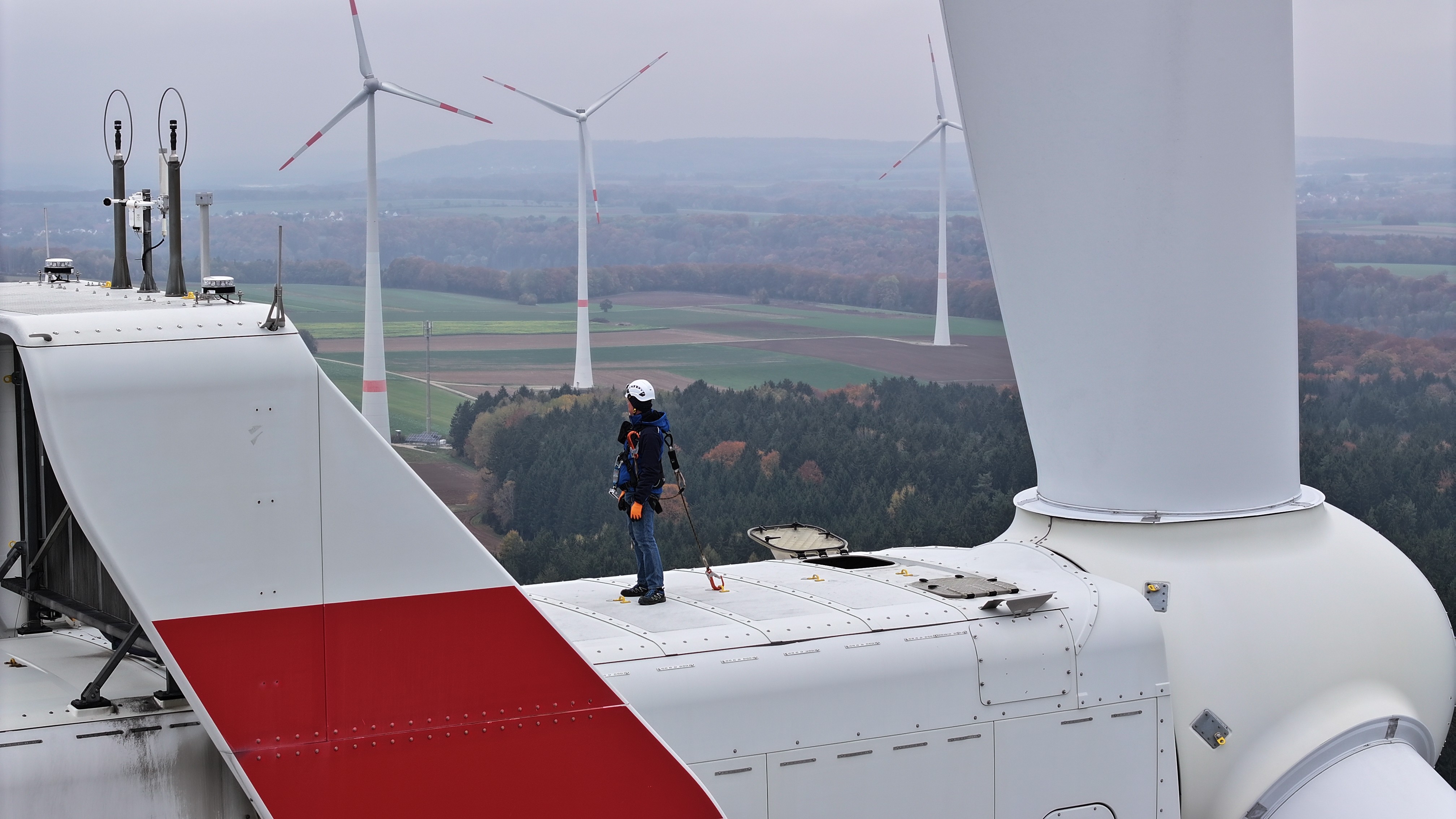
Industrial climbers are booked months in advance. Operators take whatever slots become available—even if that means shutting down during optimal wind conditions. Even if that means watching production losses mount while waiting for a crew.
The regulations are unambiguous. The resources to meet them are not.
Inspection Intervals
Certified experts must inspect machinery, rotor blades, and tower structures at prescribed intervals determined by expert assessment. The maximum interval is two years, extendable to four under specific conditions.
Required frequency by capacity:
Installed Capacity | Interval |
|---|---|
Under 300 kW | Every 4 years |
300 kW to under 1,500 kW | Every 2 years |
1,500 kW and above | Annually |
Insurers typically impose additional requirements. Lightning protection often requires biennial verification. Exceed your prescribed interval by more than three months, and coverage for affected components may lapse entirely.
Offshore installations face heightened obligations. Extreme marine conditions accelerate wear. Condition monitoring systems provide valuable data but cannot detect everything—particularly degradation in rotor blades and substructures.
The Federal Maritime and Hydrographic Agency mandates on-site visual inspections covering at least 25% of each installation annually. General maintenance every six months is the recommended baseline.
Occupational safety adds further requirements:
Fire extinguisher inspection: minimum every 2 years
Climbing equipment and personal protective equipment: annual verification
Permit conditions specify minimum emergency equipment quantities—regardless of what service crews bring with them.
Scope of Inspection
Comprehensive maintenance addresses every critical mechanical and electrical system:
Structural and visual assessment
Complete component inspection: rotor blades, tower, nacelle
Identification of corrosion, mould, cracks, scour damage
Mechanical verification
Torque checks on all bolted connections
Seal integrity and functional testing
Laser alignment verification
Drivetrain inspection with frequency-selective vibration analysis
Brake cleaning and calibration
Systems and fluids
Oil levels, replenishment, and circuit analysis
Complete filter replacement
Safety systems
Lightning protection measurement
Video endoscopy of internal components
The Capacity Problem
The regulations exist. The workforce to fulfil them does not.
Maintenance providers lack sufficient personnel for the installed turbine base. This shortage has persisted for years—and continues to worsen as new capacity comes online.
The consequences ripple through operations. Turbines go offline based on crew availability, not production optimisation. High-wind days become maintenance days because that's when the slot opened up. The financial impact compounds.
Miss your maintenance window, and the liability question becomes uncomfortable. When an uninspected turbine fails, assessors investigate. Insurers scrutinise documentation. The burden of proof falls on the operator.
The situation is untenable: compliance is mandatory, capacity is insufficient.
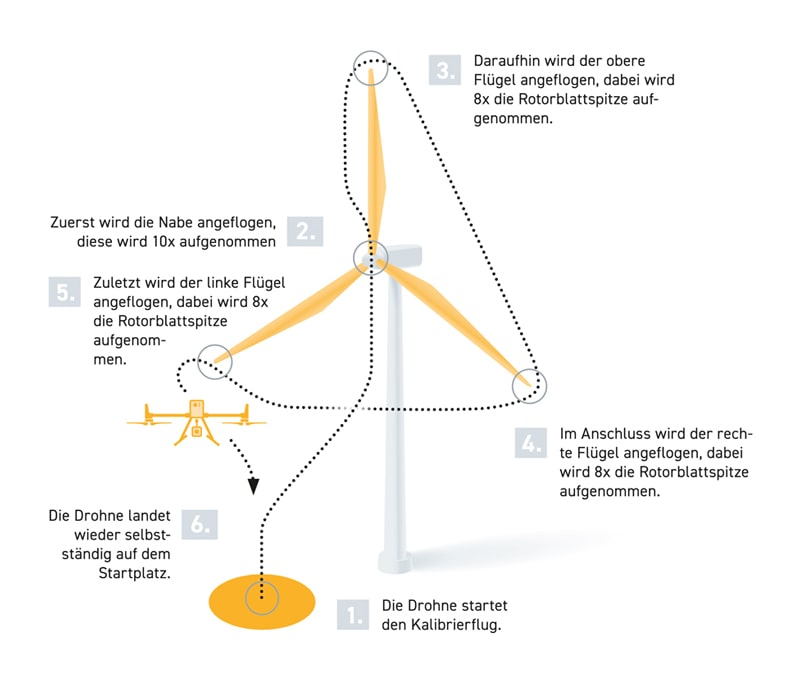
The industry requires alternatives to rope-access technicians. Climbing robots and autonomous drone inspection systems are emerging as practical solutions. These technologies don't just supplement human capacity—they can fundamentally resolve the bottleneck.
The question is no longer whether these alternatives will become standard practice. The question is how quickly operators will adopt them.
Looking for more? Dive into our other articles, updates, and strategies


Expert Robotics.
Expert Knowledge.
Operator insights, technical deep-dives, benchmark data, and platform updates from the field. No fluff.