After a Lightning Strike: The Two Wind Turbine Inspections Operators Miss
A visual inspection after a lightning strike tells you what was damaged. An LPS inspection tells you whether you are still protected from the next one. Most operators only do the first. Here is what the protocol requires.

Florian Zimmer
Head of Operations
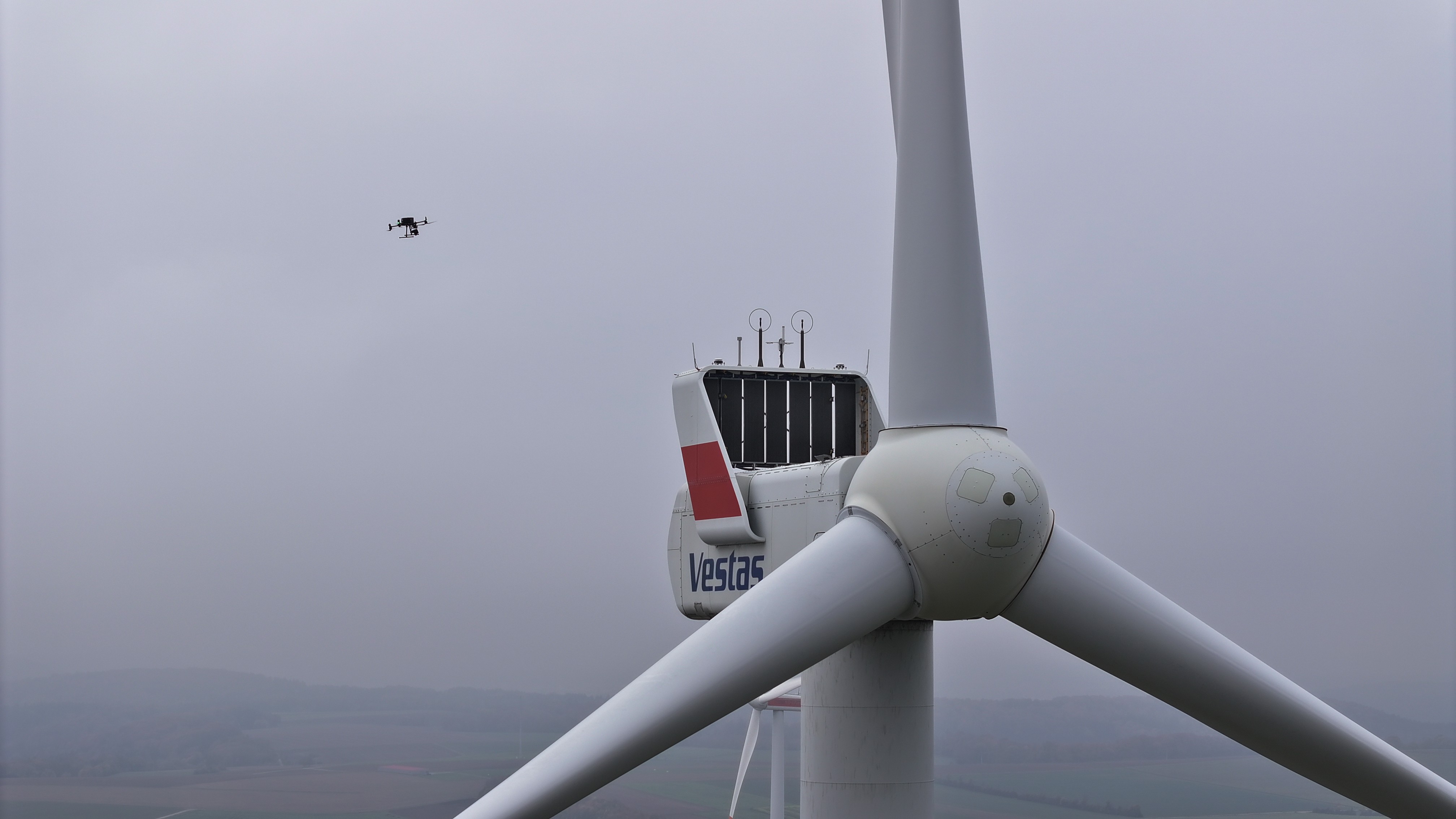
Table of contents
Share
After a Lightning Strike: The Two Wind Turbine Inspections Operators Miss
The storm passes. SCADA flags an anomaly. A lightning detection alert lands in your inbox. You dispatch a team for a visual inspection.
This response protocol sits within the complete LPS inspection guide for recurring and event-driven inspections.
The blades look intact. The receptor is in place. No visible tip damage. You log it, bring the turbine back online, and move on.
Three months later, the same turbine takes another hit. This time the blade fails.
The first strike did not destroy the blade. It broke the internal down conductor at a point that was invisible from the outside. The lightning protection system was silently non-functional for three months. The second strike had no protected path. The energy went through the laminate instead.
A visual inspection told you the blade was undamaged. It could not tell you the blade was unprotected.
Why one inspection is not enough after a lightning strike
A lightning strike on a wind turbine raises two distinct questions. Most inspection programmes are designed to answer only one.
The first question is: what damage did this strike cause? A visual inspection answers it. You look at the blade surface, the receptor, the tip area, and the root zone for evidence of external damage — erosion, cracking, char marks, displaced or degraded receptor hardware. This inspection determines whether a repair is needed today.
The second question is: is the lightning protection system still functional? A visual inspection cannot answer this. The LPS is an electrical system running inside the blade. Its functional state — whether the conductive path from receptor to tower grounding is intact — is not visible from the outside. A blade can appear entirely normal externally and have a fractured down conductor at metre 27 of the internal span.
If you answer only the first question, you know whether the turbine needs a repair now. You do not know whether it is protected from the next strike.
These are not the same thing. Treating them as the same is the operational mistake that turns one lightning event into two.
What IEC 61400-24 requires after a strike
IEC 61400-24, the governing standard for lightning protection of wind turbine generators, explicitly identifies post-event inspection as a required activity. A confirmed or strongly suspected lightning strike on a turbine is a trigger for inspection — not a routine event to be noted and left until the next scheduled assessment.
The standard’s concern is functional continuity of the lightning current path. A strike that the LPS handled successfully does not guarantee the LPS is still intact. The physical and electrical stress of conducting a strike can degrade components — particularly connection joints at the root terminal, transfer system brushes or couplings, and sections of the down conductor that experienced high current density.
Post-event inspection under IEC 61400-24 is therefore not just about finding damage. It is about confirming that the system that managed the last strike is still capable of managing the next one.
What can go wrong inside a blade after a strike
The down conductor is a copper or aluminium cable running the full internal length of the blade. It is attached to mounting brackets at intervals along the span. Every time a blade flexes under load — which is constant in normal operation — these brackets and the cable itself experience mechanical stress.
A lightning strike imposes sudden, extreme electrical and thermal stress on top of this existing mechanical fatigue. The most common post-strike failure mode is not dramatic structural damage. It is a fracture or high-resistance joint in the conductor at a point of existing mechanical weakness. The break is internal. The blade surface above it is undamaged. A visual inspection from any angle — external drone, binoculars, or rope access — will show nothing.
The root terminal is the other high-risk location after a strike. Arc damage at the root connection indicates that current sought an alternative path at that junction — which means the primary conductive connection may have been compromised or that it failed to carry the full current load efficiently. Arc evidence at the root is a specific indicator that LPS functional continuity must be verified, not assumed.
The two-mission post-strike protocol
A complete post-strike inspection protocol covers both questions with two separate missions, each with its own objective and methodology.
Mission one: visual blade inspection. The objective is to document the external condition of all three blades and receptor hardware following the strike event. This covers the full blade surface — leading edge, trailing edge, pressure side, suction side, and root zone — as well as the receptor for evidence of mechanical damage, wear, or displacement. The output is a structured record of current external condition that can be compared to the pre-strike baseline.
This mission is the one most operators already have a process for. It tells you what the strike did to the surface and hardware you can see.
Mission two: LPS continuity assessment. The objective is to confirm that the lightning current path from each blade tip receptor through the internal down conductor, across the transfer system, and to the tower grounding is electrically intact and functional. This is not a visual assessment. It requires electromagnetic wave measurement of the kind described in the LPS inspection guide in this series.
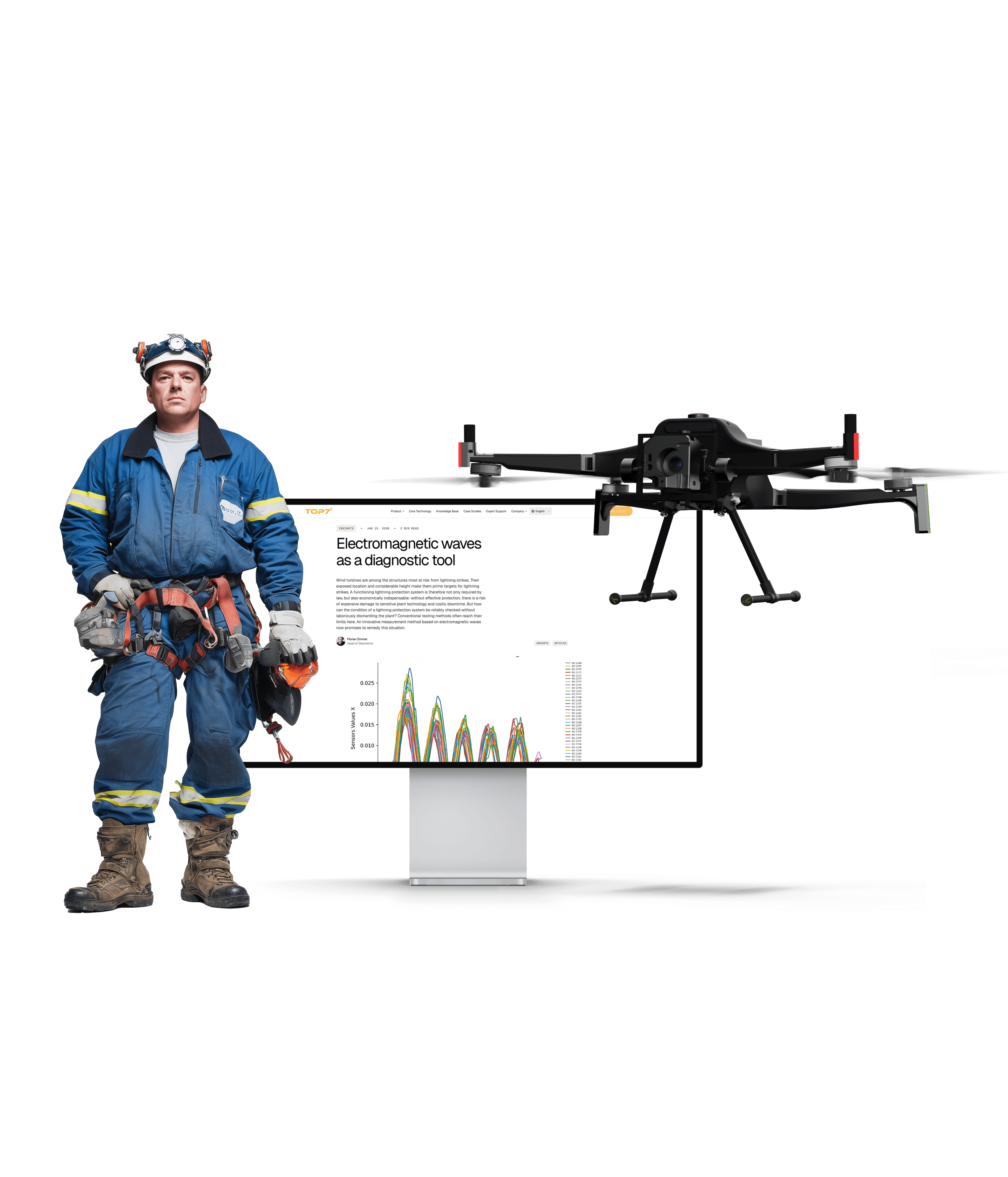
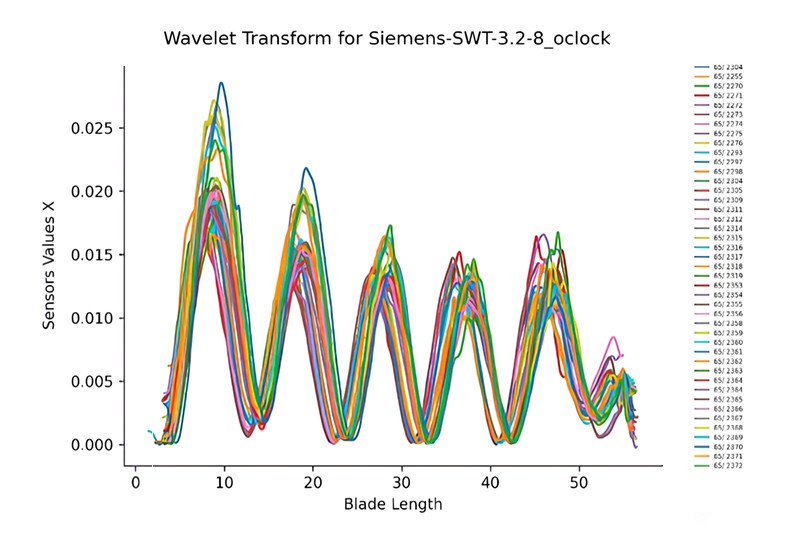
TOPseven’s BEAT sensor performs this assessment from a drone. A high-frequency signal is introduced into the LPS and the wave response along the blade is analysed. An intact system produces a characteristic standing wave pattern — the system’s electromagnetic fingerprint. A physical air gap or conductor fracture produces a distinct deviation from that pattern at the location of the discontinuity. The measurement is non-invasive, requires no rope access, and is independent of whether the blade surface shows any external evidence of damage.
These are two separate missions. They answer different questions. Neither replaces the other.
The priority sequence after a confirmed strike
Not every lightning event warrants the same response urgency. A risk-based approach to post-strike inspection prioritises efficiently.
The highest priority is a turbine where the strike was confirmed at the blade tip — the receptor directly. A tip-confirmed strike puts maximum electrical stress on the full length of the down conductor and all connection points. Visual and LPS missions should both be scheduled promptly.
A turbine where the strike was confirmed at the nacelle or tower — not the blade — carries lower blade LPS risk, though the overall system including electrical components warrants assessment.
A turbine where a strike is suspected but not confirmed — based on proximity to a detected ground strike event or anomalous SCADA signals — should be visually inspected to determine whether the receptor or blade surface shows evidence of attachment, then followed by an LPS mission if visual evidence or system signals suggest contact.
Turbines with documented prior LPS anomalies — even in range during the previous scheduled inspection — should be prioritised for LPS assessment after any storm event at the site.
What post-strike inspection data needs to look like
Post-event inspection data serves two purposes simultaneously. It informs the maintenance decision — repair now, monitor, or return to operation with no action. And it creates the insurance and warranty documentation that determines who pays for any damage that is found.
Insurance providers and OEM warranty teams specifically look at whether post-strike inspection was conducted promptly. An operator who can show a timestamped visual inspection report and a separate LPS continuity assessment following a confirmed strike event is in a fundamentally stronger position than one who presents a general inspection report from the previous scheduled cycle.
Both missions need audit-ready outputs: traceable chain from capture to signed report, timestamped, operator and system identified, position-locked data in the case of visual inspection so findings can be compared to the pre-strike baseline.
The post-strike inspection is not a box to tick. It is the document that determines whether the turbine’s next unplanned downtime event is covered or comes out of your operating budget.
Looking for a wind turbine LPS inspection system? See TOPseven BEAT →
What inspections are required after a lightning strike on a wind turbine? A complete post-strike inspection requires two separate missions. The first is a visual blade inspection documenting external surface condition, receptor hardware status, and evidence of tip or root zone damage. The second is an LPS continuity assessment confirming that the lightning current path from blade tip receptor through the internal down conductor to the tower grounding remains electrically intact. Visual inspection alone cannot confirm LPS functional integrity because conductor fractures and root terminal damage can be internally located with no visible external evidence.
Can a wind turbine blade look intact after a lightning strike and still have a damaged LPS? Yes. The down conductor runs the full internal length of the blade and is not visible from the outside. A lightning strike can fracture or create a high-resistance joint in the conductor at a point of existing mechanical weakness — particularly at mounting bracket locations or at the root terminal — without producing any visible external damage. The blade surface and receptor may appear entirely normal while the protective function of the LPS is gone. This is why a separate LPS continuity assessment is required after any confirmed or strongly suspected strike, independent of the outcome of the visual inspection.
Does IEC 61400-24 require inspection after a lightning strike? Yes. IEC 61400-24 identifies post-event inspection as a required activity following a confirmed or strongly suspected lightning strike. The standard’s focus on functional continuity of the lightning current path means that post-event inspection is not limited to finding visible damage — it includes confirming that the LPS is still capable of protecting the blade in a subsequent strike.
How quickly should a wind turbine be inspected after a lightning strike? Inspection urgency depends on the nature of the confirmed or suspected strike. A blade tip-confirmed strike — where the receptor made direct contact — warrants prompt scheduling of both visual and LPS missions given the full-path electrical stress involved. A nacelle or tower strike without confirmed blade contact carries lower urgency for the blade LPS but still requires assessment. An unconfirmed suspected strike based on proximity or SCADA anomaly warrants visual inspection to determine whether blade contact evidence exists, followed by LPS assessment if indicated.
Use the complete LPS inspection guide as the operating framework, confirm the IEC 61400-24 requirements, and budget for the unplanned inspection cost.
Looking for more? Dive into our other articles, updates, and strategies

Expert Robotics.
Expert Knowledge.
Operator insights, technical deep-dives, benchmark data, and platform updates from the field. No fluff.