In-House Drone Inspection for Wind Turbines: When It Pays
In-House Drone Inspection for Wind Turbines: When It Pays The pitch for in-house drone inspection is seductive and half true: buy the software, fly your own technicians, cut out the service provider, keep the data. The half that is true is worth having. The half that goes unsaid is that internalizing the flight also internalizes everything downstream of it, and most of the cost of a bad inspection program lives downs

Florian Zimmer
Head of Operations

Table of contents
Share
The pitch for in-house drone inspection is seductive and half true: buy the software, fly your own technicians, cut out the service provider, keep the data. The half that is true is worth having. The half that goes unsaid is that internalizing the flight also internalizes everything downstream of it, and most of the cost of a bad inspection program lives downstream.
This article lays out what in-housing actually transfers, when it genuinely pays, and how to structure it so you get the ownership without inheriting the quality burden.
What you actually take over
When inspection moves in-house, four things transfer with it. Only the first one is in the brochure.
The flying. Your technician, your schedule, your site access. With autonomous flight this part is genuinely easy now: the mission plans once, the system executes, one person supervises. This is the part the in-house pitch shows you, and it is real.
The data quality. Capture consistency, coverage verification, resolution discipline. If your program produces images that cannot be compared across cycles, you own that problem, and you may not discover it for two years, when someone asks whether a defect grew and your archive cannot answer. This transfers silently.
The judgment. Findings need classification and confirmation by someone qualified. AI detection triages, an expert decides. If in-housing means your site technician becomes that expert by default, your repair budget is now steered by whoever happened to review the gallery.
The defensibility. When an insurer or OEM contests a claim, the inspection record is your evidence. An in-house program that produces undocumented, non-repeatable results has saved you a service fee and cost you your proof.
The honest question is not whether to in-house the flying. It is which of these four you want to own, and which you want the platform to guarantee.
When in-house genuinely pays
In-house drone inspection makes clear economic sense in specific situations.
Fleets with steady internal technician capacity, where inspection slots into existing site visits instead of requiring dedicated trips. Operators with high inspection frequency, where per-flight service fees compound fastest: post-storm checks, pre-warranty-expiry sweeps, repair verification. Organizations for whom data sovereignty is policy: the record stays inside, full stop. And inspection service providers themselves, for whom the capability is the business.
For these operators, the arithmetic works, provided the program is built on a platform that locks the quality layer, which is the next point.
The structure that keeps the ownership and drops the burden
The failure mode of in-housing is buying a drone and a login and calling it a program. The structure that works keeps four guarantees on the platform side while your team flies:
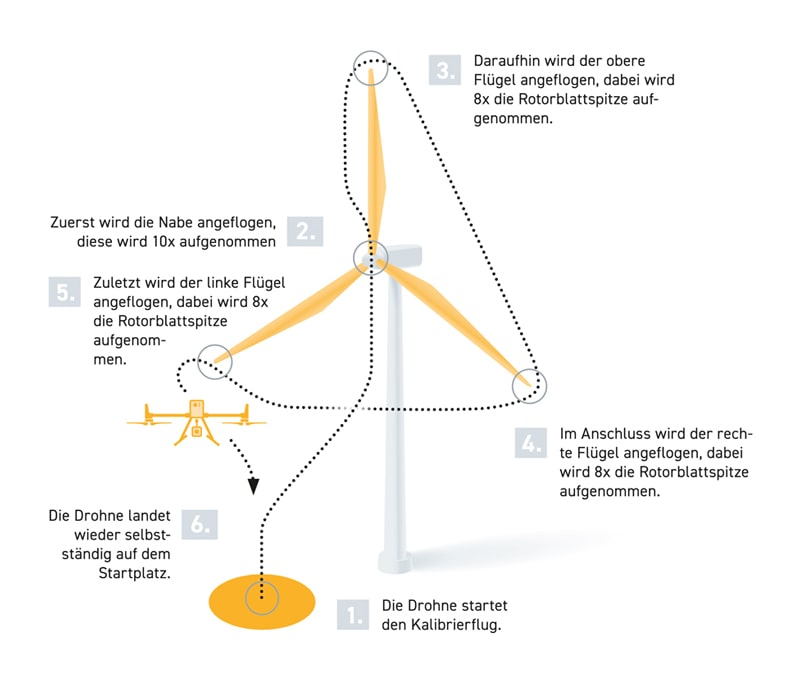
Autonomous flight, not skilled flight. The mission executes the same route every time, with or without GPS, coverage verified before landing. Your technician supervises; the reproducibility is the system’s job, not theirs. Mission planning effort runs roughly 75% below manual waypoint setup.
Detection with confirmation built in. AI flags and severity-scores across every frame; expert confirmation is a designed step in the workflow, not an aspiration. Defects resolve down to 0.2 mm at standard scan distance. A platform model depends on wind turbine inspection software that keeps every mission governed and comparable.
Evidence-grade output by default. Findings tied to turbine, blade, radius, date, and method, blade history across up to five prior inspections, audit-ready export. The defensibility is baked in rather than depending on your process discipline.
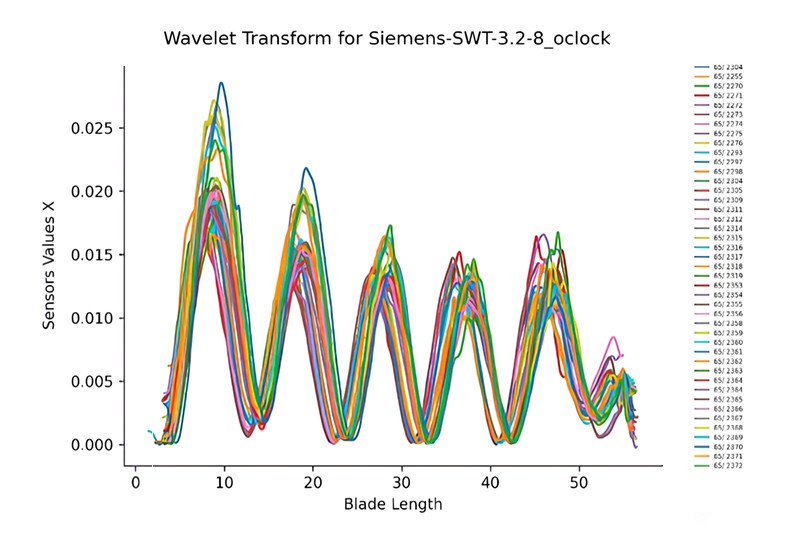
The diagnostic layer included. A camera in anyone’s hands photographs the blade surface. The lightning conductor inside the blade needs contactless electromagnetic measurement, 12 to 14 minutes for all three blades in the same mission. An in-house program without it has internalized half the inspection. Details in the LPS inspection complete guide.
Pricing completes the structure. Per-flight or per-turbine software pricing quietly recreates the service provider problem: every inspection is a budget decision again. A flat subscription with unlimited flights, TOPseven’s model runs at 3,999 Euro per month covering visual blade, visual tower, and LPS measurement, makes frequency free, which is the entire point of having the capability in-house.
The honest comparison with a service provider
A good service provider brings trained crews, absorbed weather risk, and no internal ramp-up. You trade recurring per-campaign cost and someone else’s schedule. A good in-house program brings frequency, immediacy, and data sovereignty. You trade the ramp-up and the responsibility for everything the platform does not guarantee.
The wrong reason to in-house is the belief that flying is the job. The right reason is that your fleet benefits from inspecting more often than a service contract makes affordable, and you have the operational base to use that freedom. The wind turbine drone inspection guide covers the evaluation questions that apply either way.
Frequently asked questions
Should wind turbine inspection be done in-house or by a service provider? It depends on fleet size, inspection frequency, internal capacity, and data sovereignty requirements. In-housing pays when inspection frequency is high and technician capacity exists; a service provider pays when campaigns are occasional and internal ramp-up is not worth it. The quality and evidence standard should be identical either way.
What does in-house drone inspection require? Less than it used to: autonomous flight means one supervising technician rather than a skilled pilot. What it still requires is a platform that guarantees reproducible capture, expert-confirmed detection, audit-ready output, and the LPS measurement layer, otherwise the program has internalized the flying and outsourced nothing else.
Is in-house drone inspection cheaper than a service provider? At high inspection frequency, substantially, especially under flat subscription pricing where additional flights cost nothing. At low frequency, mobilizing a service provider per campaign can remain the better arithmetic.
Who owns the inspection data in an in-house program? You do, which is one of the two structural arguments for in-housing alongside frequency. The record, the history, and the comparability across cycles stay inside your organization.
See it on a real turbine. TOPseven flies the full scope in one autonomous mission:
visual blade, visual tower, and contactless LPS measurement, TÜV SÜD validated,
audit-ready report. See how the platform works →
Related: Wind turbine drone inspection guide · Autonomous wind turbine inspection · Drone inspection vs. rope access
Looking for more? Dive into our other articles, updates, and strategies

Expert Robotics.
Expert Knowledge.
Operator insights, technical deep-dives, benchmark data, and platform updates from the field. No fluff.