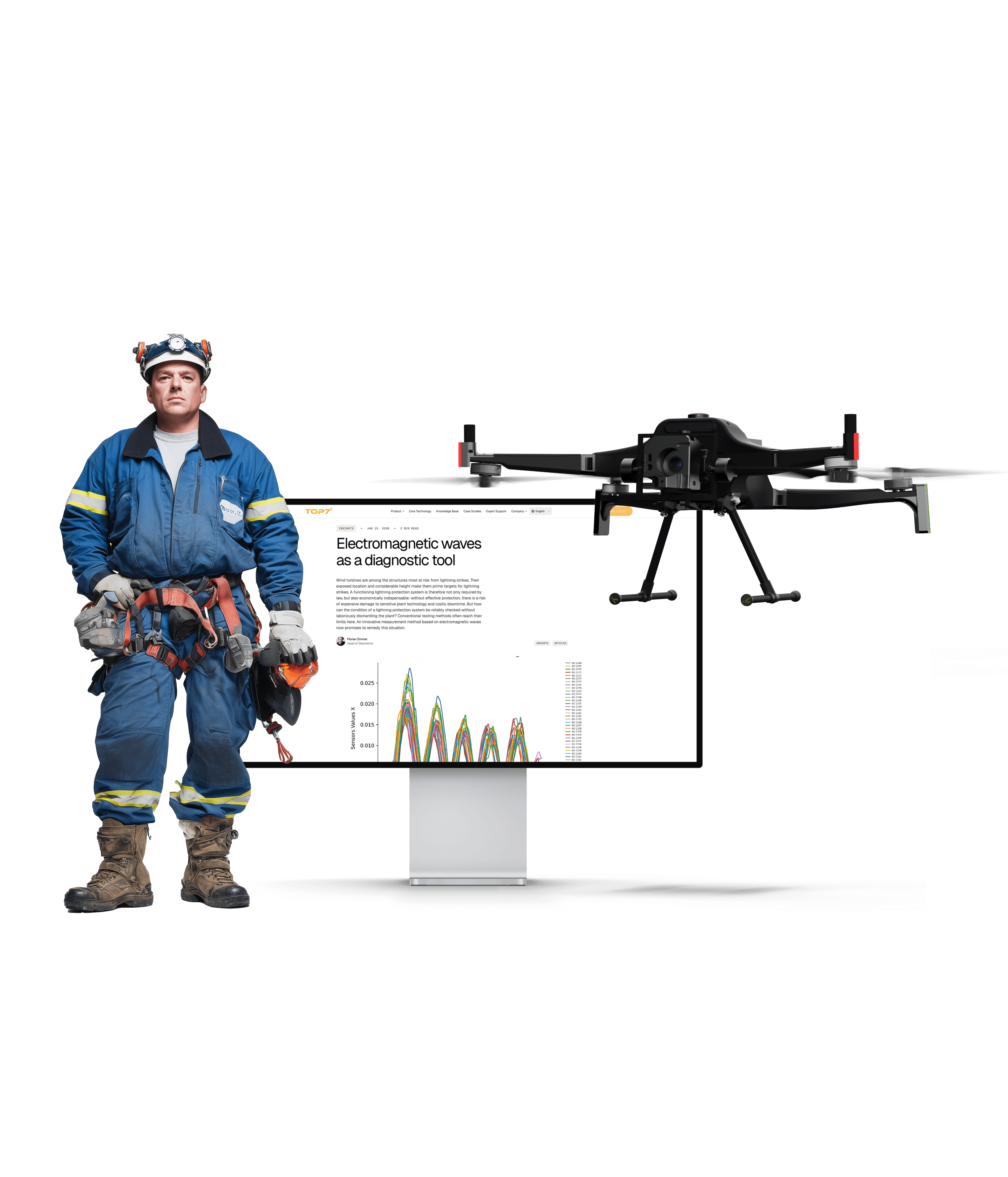
Operation and Maintenance of Wind Turbines
Operation and maintenance of wind turbines: the scope, the cost drivers, and the inspection data that decides whether O&M is planned or reactive.

Katja Weissbach
Head of Sales

Table of contents
Share
Operation and maintenance is the cost line a wind asset carries for twenty years after the capital is spent. It decides how much of the nameplate energy the turbine actually delivers, and how much of the revenue survives to the balance sheet.
This guide sets out what O&M covers, where the cost sits, and the one variable that separates a maintenance programme that is planned from one that only reacts. That variable is the quality of the inspection data underneath it.
What operation and maintenance covers
O&M splits into two functions that are often run by different teams on different logic.
Operation is keeping the turbine producing. Remote monitoring through SCADA, performance management, availability tracking, grid compliance, fault response, and the reporting that owners and lenders require. It is largely a data function, run from a control room.
Maintenance is keeping the turbine fit to produce. It divides into scheduled servicing, component replacement, and the inspection regime that tells both when they are due. Maintenance is where the physical work happens and where most of the O&M budget is spent.
The two are linked by information. Operation detects that something is wrong. Maintenance establishes what and acts on it. The link only holds if the maintenance side can see the components that SCADA cannot, which is most of the structure and all of the lightning protection system.
Where the cost sits
O&M runs at a material fraction of the lifetime cost of a wind asset, and the share rises as the fleet ages. Three categories carry most of it.
Scheduled maintenance. Planned servicing, consumables, and routine inspection. Predictable, budgeted, and the cheapest category per unit of work because it is done on chosen terms.
Unplanned repair. Corrective work triggered by failure or by a finding that forces a stop. The most expensive category, because the timing is imposed. Crane and crew mobilise on emergency terms, downtime lands when it lands, and damage that could have been repaired small has usually grown. See how autonomous wind turbine drone inspection handles this in practice.
Lost production. The revenue a turbine does not earn while it is stopped, degraded, or waiting for a part. It appears on no maintenance invoice and frequently exceeds the invoice that caused it.
The distribution between these three is the real O&M metric. A programme weighted toward scheduled work is under control. A programme weighted toward unplanned repair and lost production is paying a premium it could convert into planned spend, and inspection is how the conversion is done.
The maintenance models
Every operator runs one of three models, described in full in the maintenance strategy guide. In short:
Reactive maintenance fixes components after they fail. It spends nothing until it spends the most.
Preventive maintenance services on a fixed calendar. It is where most fleets operate, and it over services healthy turbines while under serves the ones degrading fastest, because the calendar does not know the condition of the asset. For the full methodology, see the complete wind turbine drone inspection guide.
Condition based maintenance acts on measured condition and its rate of change. Intervention lands at the cheapest defensible point in a damage progression rather than on a date. It is the model that moves budget from unplanned repair into planned work.
The models differ in one input: how well the operator can see the actual state of each turbine. That is an inspection question, not a maintenance one.
Inspection is the sensing layer of O&M
A maintenance strategy cannot be more intelligent than the data it runs on. Condition based maintenance requires condition data that is comparable across cycles, classified consistently, and complete across the failure modes that matter. Where the data is a set of unrelated snapshots, the strategy defaults to preventive regardless of intent.
Two blind spots recur in O&M programmes, and both are invisible to the control room.
Blade surface condition degrades continuously and is the single largest repair category on most fleets. SCADA does not see it. It is established by inspection, and the inspection is only useful for maintenance planning if this cycle’s data can be read against the last. How the methods compare on that point is covered in wind turbine inspection methods.
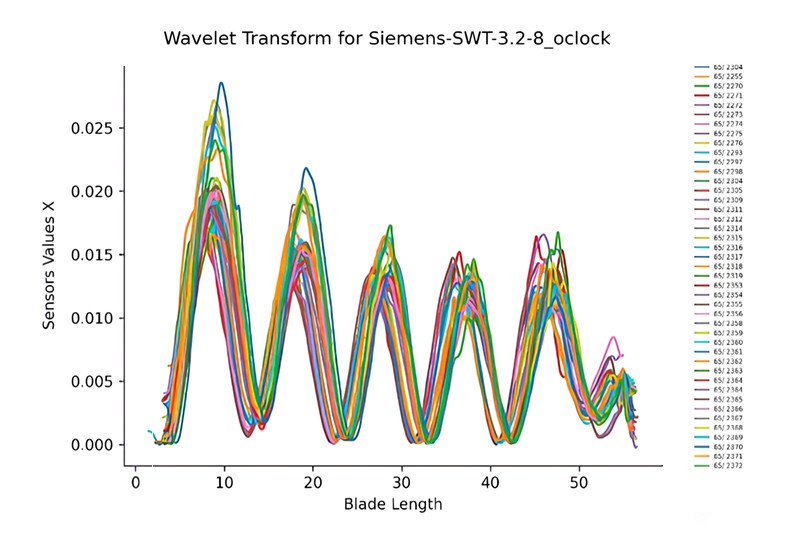
Lightning protection integrity is invisible to SCADA and to every camera. The conductor path inside the blade either carries a strike to ground or it does not, and the only way to know is electrical measurement. A strike that finds a broken path causes blade damage that an intact system would have prevented, which converts a maintenance item into a replacement. Covered in the LPS inspection complete guide.
An O&M programme blind to either of these is running preventive maintenance on the parts it cannot see, whatever it runs elsewhere.
What separates planned O&M from reactive O&M
The difference is not effort or budget. It is whether the programme knows the condition of its assets before the assets force the issue.
Planned O&M holds comparable inspection data across cycles, so it sees damage progress and schedules the repair at the cheap end of the curve. It verifies the lightning protection path on a cycle and after every suspected strike, so a broken conductor is found by a measurement rather than by the next strike. It documents to a standard an insurer and an OEM will accept, so warranty and claims positions hold. The intervals and obligations that frame this are set out in the annual inspection planning guide.
Reactive O&M inspects to satisfy a requirement, files the result, and discovers condition when condition fails. It spends the same money in a worse order.
The lever between the two is inspection data quality. It is the cheapest thing to improve in an O&M programme and the one with the longest reach.
Frequently asked questions
What does operation and maintenance of wind turbines include? Operation covers monitoring, performance management, grid compliance, and reporting, run remotely through SCADA. Maintenance covers scheduled servicing, component replacement, and the inspection regime that determines when both are due. Operation detects a problem; maintenance identifies and corrects it.
What are the main cost drivers in wind turbine O&M? Scheduled maintenance, unplanned repair, and lost production. Unplanned repair and lost production are the expensive categories because their timing is imposed rather than chosen. The share of budget sitting in planned versus unplanned work is the clearest indicator of whether a programme is under control.
How does inspection affect O&M cost? Inspection is the sensing layer the maintenance strategy runs on. Comparable inspection data across cycles lets an operator repair damage at an early and cheap stage and verify the lightning protection path before a strike exploits a break. Without it, a programme reacts to failures it could have scheduled around.
What is the difference between preventive and condition based O&M? Preventive maintenance services on a fixed calendar regardless of condition. Condition based maintenance acts on measured condition and its rate of change, so work lands at the cheapest defensible point in a damage progression. Condition based maintenance requires inspection data comparable across cycles.
Can SCADA data replace physical inspection in O&M? No. SCADA describes drivetrain and performance condition. It does not see blade surface damage and cannot verify whether the lightning protection path is intact. Both require physical inspection and, for the lightning path, electrical measurement.
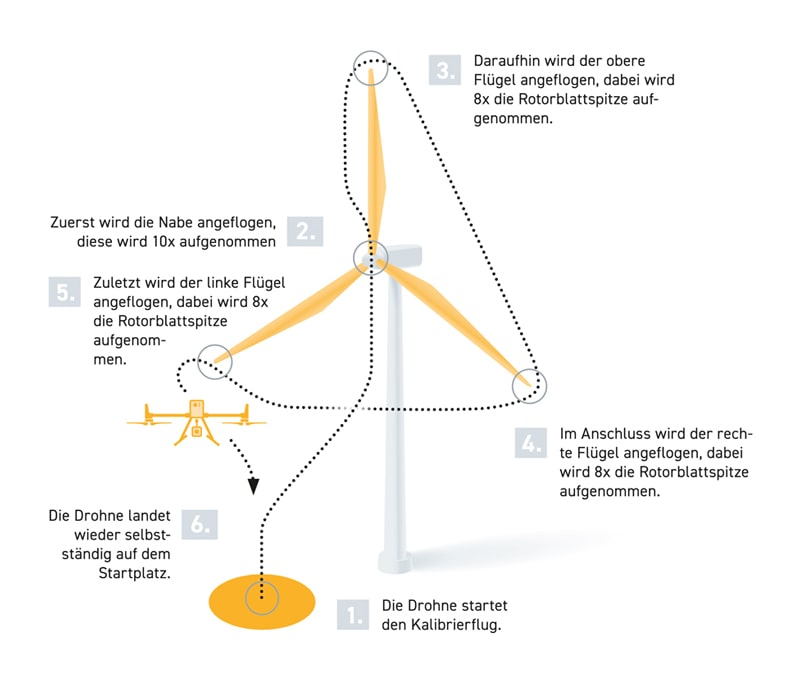
TOPseven standardises inspection from mission planning to report, so O&M runs on data that is consistent, comparable across cycles, and audit ready. Visual blade, visual tower, and contactless LPS measurement in one autonomous mission, TÜV SÜD validated.
Related: Inspection methods compared · Annual inspection planning guide · LPS inspection complete guide
Looking for more? Dive into our other articles, updates, and strategies


Expert Robotics.
Expert Knowledge.
Operator insights, technical deep-dives, benchmark data, and platform updates from the field. No fluff.