Drone Inspections: Methods, Standards and Evidence
How drone inspections work, which method fits which asset, and what separates capture from defensible evidence. Written for teams who sign off on results.

Florian Zimmer
Head of Operations

Table of contents
Share
Drone inspections use an unmanned aircraft and a sensor payload to record the condition of an industrial asset without putting a person on it. This page covers the methods, which asset each one fits, the standards that apply, and what separates a capture tool from an evidence process.
What is a drone inspection?
A drone inspection is a structured examination of an industrial asset in which an unmanned aircraft carries sensors along a planned flight path and records the asset’s condition, which is then assessed against a defined standard. The aircraft is one component. The inspection is the procedure around it: planning, capture, analysis, and the record it leaves behind.
Drone inspections replace human access, not human judgement. What changes is how the asset is reached and how consistently it can be reached again. Three phases decide whether the result is worth anything, and each one fails in a specific way.
Mission planning. Define what has to be captured before anything flies: which surfaces, at what resolution, from what standoff and angle, in what sequence. A good plan is derived backward from the report, from the findings someone will have to act on. A bad plan is a waypoint list drawn on site, which is why the second flight rarely matches the first.
Capture. The aircraft holds position and geometry while the sensor records. What varies: standoff distance, image overlap, exposure under changing light, and whether the platform can hold station when GPS degrades near steel. Coverage gaps are created in this phase and discovered months later.
Analysis. Findings are classified, measured and located on the asset: by blade, by section, by distance from root. What varies is whether each finding stays linked to the frame it came from. A finding you cannot open back to its source image is an opinion.
Which drone inspection method fits which asset?
The method follows the failure mode you are looking for, not the asset you are standing under. Surface damage, subsurface loss, thermal anomaly and electrical continuity are four different questions. No single sensor answers more than one of them well.
Visual capture
High resolution imaging of the outer surface. It detects cracks, erosion, lightning strike damage at the receptors, coating loss, surface visible delamination and debris. It cannot see beneath the laminate and it cannot tell you whether a down conductor is still continuous. Resolution is the whole argument: a defect measured in millimetres needs a ground sample distance in fractions of a millimetre, and that sets standoff and sensor together, not separately.
Thermal
Radiometric imaging detects temperature differentials that indicate subsurface anomalies: trapped moisture, disbonds and laminate voids in blades, hot joints and cell defects on electrical plant. Thermal is diagnostic only under a thermal load, whether that is solar gain, operating temperature or an active heating cycle. In flat light, at the wrong hour, or with wind cooling the surface, the differential disappears and you get a clean image of nothing. Emissivity variation across coatings and surface contamination both produce signatures that look like findings and are not.
Contact based NDT
Ultrasonic thickness, eddy current and coating thickness measurement, delivered by a platform that physically touches the surface. This is a well established method. For storage tanks, stacks, pressure vessels and steel structures it is frequently the correct one, because it returns a quantitative wall thickness that no camera can infer. Its constraints are equally plain. It samples points, not areas, it needs surface contact and coupling, and it needs an aircraft that can apply force against the structure.
Contactless electromagnetic diagnostics
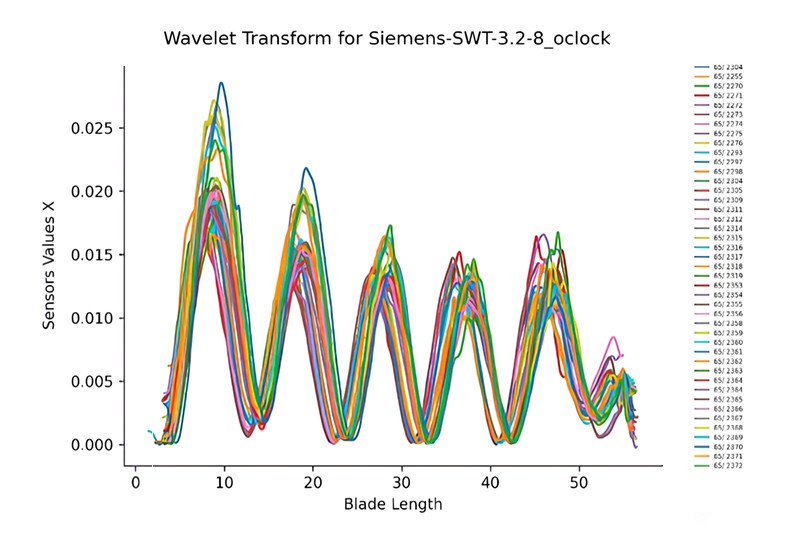
Measurement of the lightning protection system (LPS), the conductor path from receptor to hub, without physical contact and without opening the blade. The lightning current path is a different problem from surface condition. A receptor can look intact while the conductor behind it is broken, and a blade with visible erosion can have a sound LPS. Continuity is electrical, not visual, which is why visual capture alone cannot close out a lightning protection requirement. Depth on this method sits in the complete guide to LPS inspection on wind turbines.
Confined space and indoor
Collision tolerant platforms flying without satellite positioning inside tanks, boilers, silos, ducts and shafts. Where they belong: any enclosed volume that would otherwise need an entry permit, scaffolding or gas testing. Their output serves screening and triage, deciding whether an entry is needed at all, and they trade resolution and positional accuracy for the ability to fly where nothing else can.
Method against failure mode
Method | Measures | Cannot detect | Typical assets |
|---|---|---|---|
Visual | Surface geometry and condition; crack length, erosion, coating loss | Subsurface damage, conductor continuity, wall thickness | Rotorblades, towers, bridges, façades |
Thermal | Temperature differential; moisture ingress, disbonds, hot joints | Anything without a thermal load; defect size and depth | Blades, PV plant, substations, building envelopes |
Contact NDT | Wall thickness, corrosion loss, coating thickness at a point | Area wide condition; anything between sample points | Storage tanks, stacks, vessels, steel structures |
Contactless LPS | Lightning current path continuity and fault location | Surface damage, structural condition, laminate loss | Rotorblades, LPS protected structures |
Confined space | Internal surface condition, obstruction, debris, corrosion extent | Precise measurement; repeatable position without a fix | Tanks, boilers, silos, shafts, ducts |
Most inspection programmes combine two or three of these. For rotorblades the combination that matters is visual plus LPS in one pass, because the two findings have to be reconciled on the same asset, on the same day, in the same record. Otherwise you are comparing a photograph from March with a measurement from September. The turbine specific workflow, blade economics and operating model are covered in wind turbine drone inspection.
Why do two drone inspections of the same asset produce different results?

Because almost nothing about a manually flown inspection is specified tightly enough to reproduce. Two competent crews, given the same turbine and the same brief, will fly different standoffs, different angles and different coverage, and hand you two records that cannot be compared.
Pilot variability: Where the brief says capture the leading edge, one pilot flies it at 6 m and one at 12 m. The same defect appears at two resolutions and gets classified twice, differently.
Standoff and angle: Oblique capture foreshortens a crack and hides the depth cue that made it a category 3 last year. Nothing in the image tells the analyst that the geometry changed.
Positioning drift: GPS accuracy degrades near steel dense structures and in complex geometry. Multipath off the tower, the nacelle and the blade root can put the aircraft metres from where the log says it was. Position uncertainty becomes coverage uncertainty, and coverage uncertainty is invisible in a folder of images.
Weather window compromise: Capture happens when conditions allow, not when they are ideal. Light shifts across a set, wind pushes the standoff out, and a crew with four turbines left and two hours of window makes decisions that never reach the report.
Unverified coverage: The consequential one. Nobody confirms that the whole surface was captured. They confirm that the images look good. A confident sample and complete coverage are indistinguishable after the fact.
The consequence is not a bad report. It is a report that cannot be set against last year’s. Degradation tracking depends on equivalence: root to tip against root to tip, the same sections, the same resolution, the same geometry. Without it, a crack that has grown 15 mm and a crack that was photographed from a different angle look the same on your screen, and you are choosing between an unnecessary rope campaign and an ignored defect.
Repeatability, not image quality, is the property to specify when you buy drone inspections. Image quality is easy to demonstrate in a sales meeting. Repeatability shows up on the second visit.
What makes a drone inspection result defensible?
A defensible result is one a third party can reconstruct without you in the room. Five properties decide it, and image quality is not among them. They work as evaluation criteria for any provider, including us.
1. Repeatability: The same mission, flown the same way, at the same standoffs and angles, on every repeat visit. Ask how a mission is defined, where it is stored, and what happens when a different crew flies it. If the answer is a pilot briefing, the answer is no.
2. Coverage verification: Positive proof that the whole asset was captured, not the absence of an obvious gap. Ask for a coverage record per blade section: captured at the required resolution, captured out of tolerance, or not captured, and why.
3. Traceability: Every finding linked to the frame, the measurement, the position on the asset and the timestamp that produced it. Two clicks from a line in a report to the pixels it came from. Anything less is an assertion with a logo on it.
4. Interpretability: A report the person signing it can read without a translator. Operators describe the failure exactly: the report didn’t make sense. Severity classes have to be defined, locations unambiguous, and the recommended action stated. A 400 page image dump transfers the work back to you, not the risk away from you.
5. Chain of custody: The record has to hold when an OEM disputes a warranty claim, when an insurer asks what the asset looked like before the event, or when an auditor asks who signed off and on what basis. That means fixed timestamps, identified operators, retained source data, and an export that survives being read by someone who was not there.
None of the five is exotic and none requires a particular airframe. They are procurement questions. Ask them of every provider you shortlist, then ask them of your own team if you are considering in-house capability. What you are specifying is a defensible result, not a clever measurement.
Which standards apply to drone inspections?
For wind assets, four documents carry most of the weight, and none of them tells you which instrument to use. They specify required outcomes and intervals. The method is yours to choose and yours to defend.
IEC 61400-24: Lightning protection for wind turbines. Sets the protection concept, the inspection intervals and the documentation expected as evidence that the lightning current path is sound. Read the clause level walkthrough.
IEC/EN 62305: Lightning protection generally: risk assessment, protection levels, and the inspection and maintenance regime for structures outside the turbine specific case.
FGW TR10: German technical guideline for the certification of electrical characteristics. Relevant because grid compliance evidence and asset documentation are audited together in the German market.
VDE-AR-N 4110/4120: Connection rules for medium and high voltage grid connection. They frame the compliance context a German operator’s documentation sits inside.
**Read this distinction carefully.** IEC 61400-24 specifies an outcome: evidence that the lightning current path from receptor to earth is continuous and within the required limits, inspected and documented at defined intervals. It does not mandate a probe, a contact measurement, a particular test current or a particular tool. Any method that produces defensible evidence of continuity, and locates the fault when there is one, can satisfy it. No method satisfies it because a datasheet says so. When a vendor presents their measurement technique as the standard’s requirement, they are describing a product, not a standard. The question to ask a provider is which clause their evidence addresses and how their record demonstrates it. The answer should cite the clause.
One boundary worth stating plainly: standards set inspection intervals and required outcomes, not acceptance criteria for every possible finding. Repair thresholds come from the OEM’s maintenance manual and your own engineering judgement. A provider who tells you a standard decides whether a 40 mm crack is acceptable is over reading it.
Should you run drone inspections in-house or use a provider?
In-house pays when you have recurring volume across assets you control, a certified crew you can keep current, and the appetite to own data quality. Below that threshold a provider is cheaper and lower risk. It is a volume decision, not a philosophical one.
Service provider. You buy a result. Fastest to start, no capability build, no certification burden, cost that scales with assets rather than with capital. The risk you keep is comparability. Change provider and your baseline changes with it, because their mission definition leaves when they do.
In-house. You buy capability. Aircraft, sensors, operator authorisation, remote pilot competency, recurrent training, maintenance, insurance and a data pipeline. It pays at recurring volume, and it gives operators the thing they often say they want: one company doing the whole thing, on your schedule, with nobody between you and your asset. What shifts onto you is the part nobody quotes for. Data quality, repeatability and the audit trail become your problem.
Platform. You buy the procedure. Mission definitions, autonomy, analysis and report format are the product. Your crew or your provider’s crew executes it. This is the model that holds comparability when personnel change. It sits behind your systems, not in front of them, with findings landing in your asset hierarchy and your maintenance planning rather than in one more portal somebody has to remember to open.
Whichever route you take, put the five properties from the previous section in the contract. A provider who cannot supply coverage verification today will not start supplying it because the invoice says inspection. Inspection software for wind turbines and the platform layer are where that specification lives on our side. The wind specific version of this decision, with the economics, is in in-house drone inspection, and the method cost comparison is in drone inspection vs rope access.
How TOPseven runs drone inspections
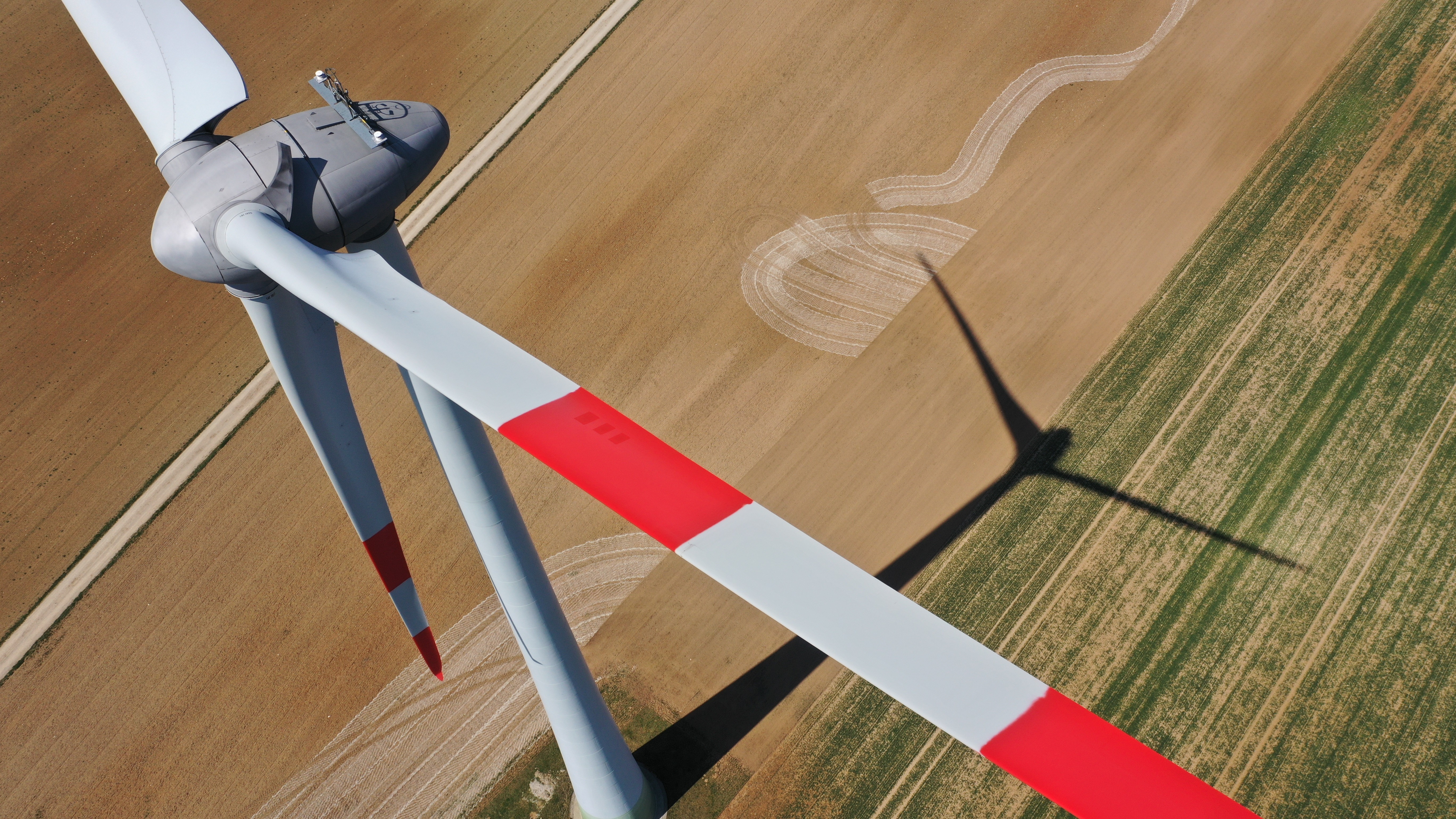
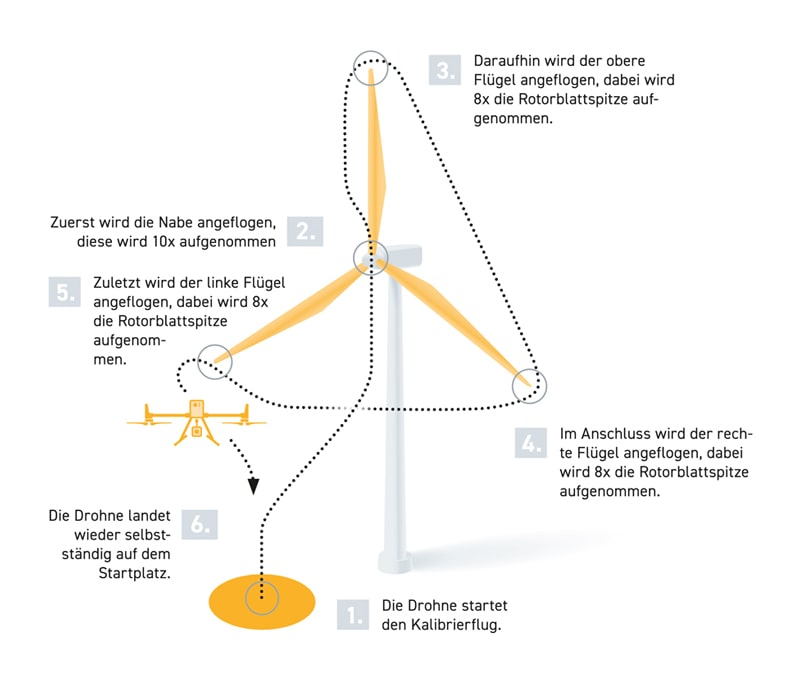
TOPseven standardizes drone inspections from mission planning to report, so the work moves from access on the asset to review at the desk. What that consists of, in artifacts:
Mission templates written backward from the report: The deliverable defines the capture. Each template fixes surfaces, sequence, standoff, angle and required resolution per section, and is flown again identically on the next visit. Year on year comparison is between two executions of the same template, not two interpretations of a brief.
GPS independent near field autonomy: The aircraft holds position relative to the structure rather than to a satellite fix, which is what makes steel dense and complex geometry assets tractable. Mission success is 98.7% verified.
Inspection grade 61 MP imagery, captured consistently: Continuous shoot flight runs 48% faster than stop and shoot capture at the same coverage specification. Learn all about TOPseven SIGHT.
Patented contactless LPS testing with precise fault localization: The output is a position on the conductor path, not a pass or fail on the blade. Localization, not just detection, and no false positives to re inspect. The method is validated by TÜV SÜD. The validation scope ships as a document with the sample report rather than as an adjective on this page. Learn all about TOPseven BEAT.
Audit ready reports with chain of custody: Every finding carries its source frame, its measured position on the blade, its severity class, its timestamp and the operator who captured it. The custody record is in the export, not in an email thread.
European governance and data portability: Sensors, platform and storage sit under European control, and your evidence leaves in an open format when you ask for it. Governance is part of the deliverable, not a procurement footnote.
Experts stay in control: The autonomy executes the template. The pilot can take over at any moment. Nothing in the procedure removes the person who is accountable for it.
96.8% Verified mission success · 7 Turbines per day, visual and LPS integrated · up to 70% Lower inspection cost, one pass missions · hours Capture to report, where cycles ran in days
Where we are not the answer: point wall thickness measurement, and anything requiring physical contact with the surface, are contact NDT problems. Tanks, stacks and vessels are usually served better by the methods in section two, and we will say so on a call rather than after the purchase order. Renewables and structures set out where the platform is deployed today.
Drone inspection questions, answered
How much does a drone inspection cost? Pricing is per asset and depends on method, access and volume. The figure that matters is total cost per inspected asset including access, downtime and report processing, not a day rate. One pass missions that capture visual and LPS data together reduce inspection costs by up to 70% against sequential campaigns. The wind specific breakdown is in the [LPS inspection cost guide](/knowledge-base/wind-turbine-lps-inspection-cost), and the [ROI calculator](/roi-calculator) runs the arithmetic for your fleet.
How long does a drone inspection of a turbine take? An integrated visual and lightning protection system inspection of one turbine takes well under an hour of flight time, and a crew completes 7 turbines per day. Report turnaround is the other half of the answer. With analysis in the pipeline, findings arrive in hours rather than days after capture.
Do you have to stop the turbine? Yes. Blade inspection requires the rotor stopped and, for most methods, the blades positioned. That downtime is the dominant cost, which is why capturing visual and LPS data within a single stop matters more than flight speed does.
What qualifications does the pilot need? In the EU: operator registration, remote pilot competency matched to the operational category under Regulation 2019/947, and site specific risk documentation. Requirements differ by country and by whether the flight falls in the open or the specific category. Confirm against your national aviation authority.
How often should assets be inspected? Intervals come from the OEM maintenance manual, the applicable standard and your insurer. For wind turbines, a blade inspection every one to two years with lightning protection system continuity testing at the interval set out in IEC 61400-24 is the common baseline. A lightning event or a warranty dispute triggers one outside the schedule. Programme level planning is covered in the [annual inspection planning guide](/knowledge-base/annual-wind-turbine-inspection-planning-guide).
Can drone inspections replace rope access entirely? No. Drone inspections replace the inspection climb, not the repair. Rope teams and platforms are still needed for repair work, contact measurement and close verification of an ambiguous finding. What changes is that they arrive at a known location with a known defect instead of searching for it.
What does a drone inspection report contain? Asset and blade identification, a coverage record per section, every finding with severity class, measured size and position, the source frame it came from, the LPS continuity result with fault localization where applicable, timestamps and operator identity. Without those elements it is an image folder, not a report.
How do you verify full coverage? Coverage is verified against the mission template, not against the image count. Each specified section is marked captured at the required resolution, captured out of tolerance, or not captured, and that record ships with the report. Ask any provider for this document before you sign.
Go deeper
Platform: Robotics and near field autonomy · Inspection software · Sensor payloads · Software for wind turbine inspections
Sensors: TOPseven BEAT, contactless LPS testing · TOPseven SIGHT, 61 MP inspection camera · Use case: renewables · Use case: structures
Knowledge base: LPS inspection on wind turbines: complete guide · IEC 61400-24 inspection requirements · Wind turbine drone inspection · Annual inspection planning · Beyond resistance: LPS continuity
Request a sample report
It is the fastest way to check everything on this page: the coverage record, the finding structure, the LPS result with fault localization, the timestamps, and the scope of the TÜV SÜD validation. Read it against the five criteria in section four, then against whatever you receive today. Ten minutes with the document will tell you more than a demo.
Looking for more? Dive into our other articles, updates, and strategies

Expert Robotics.
Expert Knowledge.
Operator insights, technical deep-dives, benchmark data, and platform updates from the field. No fluff.